

When Blood Writes Destiny
How “No One Dies Twice” Mirrors the Weight of Tradition in Upper Egypt
Abanoub Nabil
5/10/20263 دقيقة قراءة
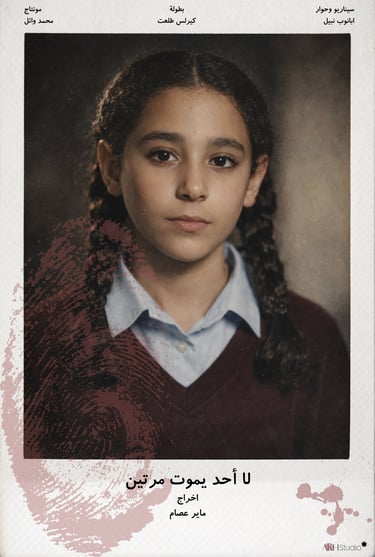
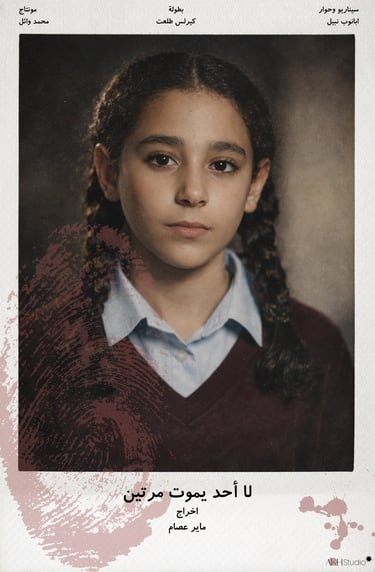
In many parts of rural Upper Egypt, life is not shaped only by personal choice—it is inherited. Family, honor, and history move through generations with a force that can feel impossible to escape. “No One Dies Twice” doesn’t treat vengeance as spectacle. Instead, it reveals something more unsettling: how deeply tradition can shape identity, and how the idea of blood for blood can quietly dictate the course of a young man’s life.
The film opens with urgency—information passed in hushed tones, a location identified, a plan set in motion. But beneath the surface of this thriller structure lies a social reality that has existed for decades: cycles of retribution rooted in what is often called blood feud (ثأر). These are not random acts of violence. They are systems—codes of conduct embedded in communities where justice is not always trusted to institutions, and where honor becomes a collective responsibility.
Inheritance, Not Choice
What the film captures with precision is how vengeance is rarely personal at the start. It is inherited.
Selim is not simply a man seeking revenge. He is a product of expectation. The pressure around him—from family, from memory, from loss—forms a psychological cage. When someone tells him, “you’ll avenge us and let our dead rest in peace,” it is framed as duty, not decision.
In this world, refusing revenge is not neutrality—it is betrayal.
This is where the film becomes powerful. It shows how young men in these environments are often raised with a predefined role. Masculinity is tied to action. Silence can be mistaken for weakness. And grief is rarely processed—it is redirected.
Faith vs. Violence
One of the most striking contrasts in the film is the inclusion of a Qur’anic verse calling for submission and righteousness, juxtaposed against a narrative driven by revenge. This tension reflects a real and painful contradiction.
Faith, in its essence, calls for restraint, justice, and patience. But tradition—especially when tied to generational trauma—can override those values. The result is a fractured moral compass, where individuals justify violence while still believing in righteousness.
The film does not preach. It simply places these contradictions side by side and allows the viewer to feel the weight of them.
The Psychology of a “Condemned” Life
Perhaps the most honest moment in the film comes when Selim admits:
“The only reason I’m doing what I do… is because I feel like a piece of garbage.”
This line shifts everything. Revenge is no longer about strength—it becomes about self-worth.
In communities governed by honor codes, individuals can internalize the idea that their value is tied to fulfilling these expectations. If they fail, they don’t just disappoint others—they lose their place within the social structure.
The film exposes this internal collapse. It shows how the cycle of violence doesn’t just take lives—it reshapes identities.
Women, Family, and the Silent Cost
While the film centers on male experience, it quietly acknowledges those who bear the consequences: families, wives, and children.
A man leaving for work, a conversation about providing for a daughter, a woman holding together a fragile home—these moments ground the story in reality. They remind us that vengeance is never isolated. Its impact ripples outward, often harming those who had no part in the original conflict.
The line “Everything we’re doing is for the girl… the girl we’ve dragged through all this” captures the tragic irony. Actions justified as protection often become the very source of destruction.
Tradition as a Closed System
What makes the system of blood revenge so powerful is that it sustains itself.
One act leads to another. One loss demands a response. Each generation inherits unresolved conflict from the one before. Over time, the original cause becomes less important than the obligation to continue.
“No One Dies Twice” reflects this perfectly. The characters are not asking why anymore. They are asking when and how.
And that is the most dangerous stage of any cycle—when it becomes automatic.
Breaking the Cycle
The film doesn’t offer easy solutions, and that’s part of its honesty. Escaping such systems is not simply a matter of courage. It often requires isolation, exile, or the rejection of one’s own community.
When a character warns, “you’ll end up garbage like me… if you don’t run away,” it feels less like advice and more like a confession. Leaving is not freedom—it’s loss of identity, belonging, and protection.
But it may be the only way forward.
A Mirror, Not a Judgment
Importantly, the film does not demonize rural Upper Egyptian communities. It doesn’t reduce them to violence or tradition. Instead, it presents a human story shaped by real pressures—economic hardship, limited institutional trust, and deeply rooted cultural systems.
By doing so, it invites understanding rather than judgment.
“No One Dies Twice” works because it doesn’t exaggerate. It observes. It listens. And in that quiet observation, it reveals something universal: when people feel trapped between who they are and who they are expected to be, the cost is never just personal—it becomes generational.
In the end, the film asks a difficult question:
If your life was written before you had the chance to choose it… would you follow the script, or walk away from everything you’ve ever known?